
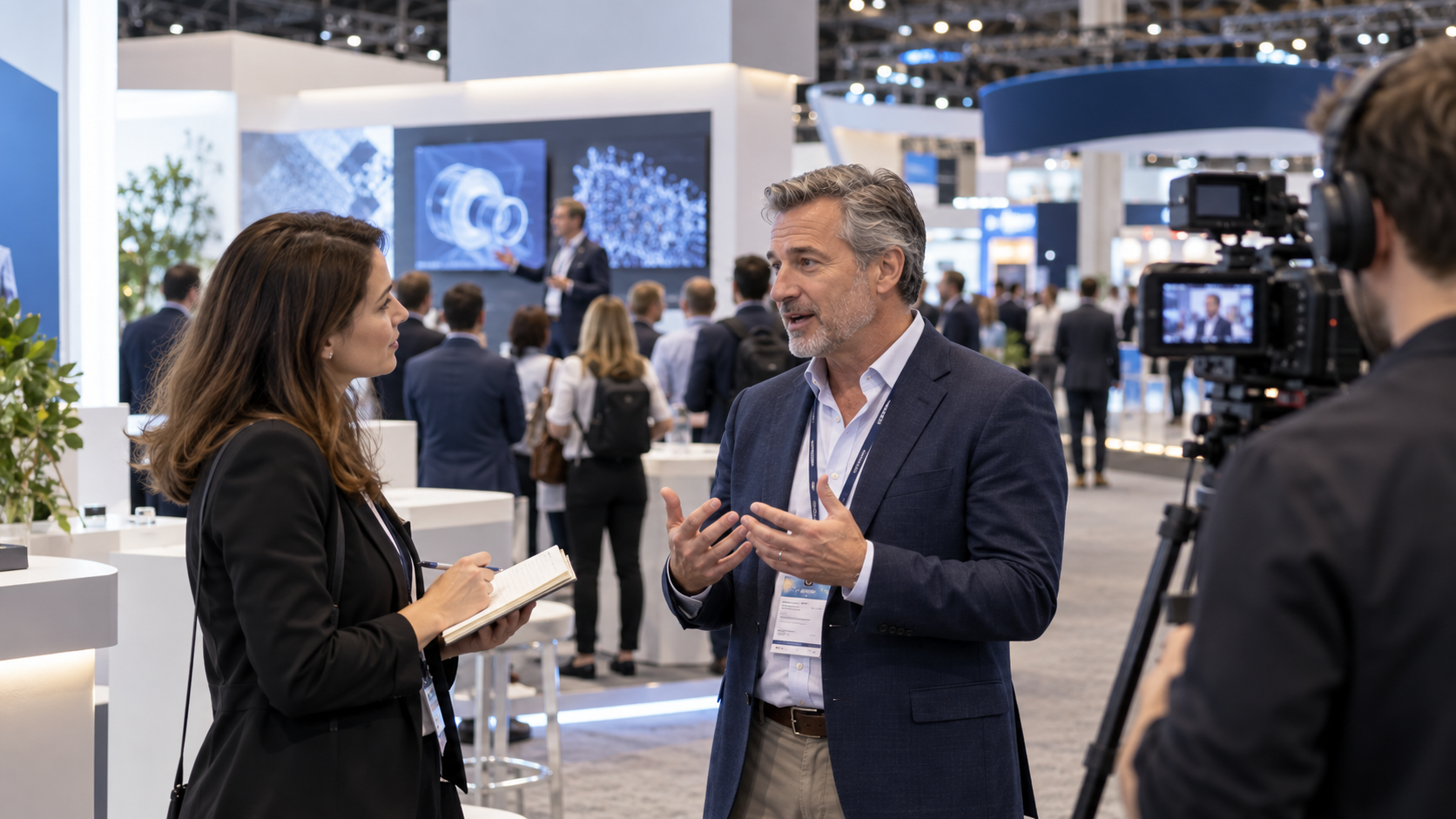

Trade shows are expensive. Between the booth, sponsorships, travel, product launches and executive time, companies invest a lot to be there. But simply showing up, even with a polished exhibit and a full schedule of meetings, doesn’t guarantee you’ll get much more out of the event than a few days of face time.
The companies that get the most value from a trade show think beyond the booth. They use the event as a reason to start conversations. They also give their executives something meaningful to say. As a result, they create opportunities that continue after the show ends.
Maximizing your presence doesn’t have to be daunting. Here are five ways to do it.
Start with your story, not your booth
Before you start planning media meetings or sending booth invitations, decide what you want your company to be known for at the show.
A product launch may be part of that story, but it shouldn’t be the only one. Look at the bigger picture. What are customers asking about? Which problems are becoming harder to solve? What changes are affecting the industry? What does your company know that others don’t? Be prepared to offer your perspective and insights—bonus points if you have a contrarian point of view that offers a new angle on an industry challenge.
To get started, build a simple story map around three questions:
- What are we launching or promoting?
- What do we know?
- What do we think is coming next?
The answers give your PR team several avenues to pursue. These include product coverage and demos as well as executive interviews and broader trend stories.
It’s also imperative to start this conversation early. Ideally, PR should be in the room with product, marketing and event teams several months before the show. This timeline gives everyone time to identify the strongest stories and gather supporting materials. It also helps you determine which announcements or conversations may warrant media outreach.
Give reporters a reason to talk to you before the show
By the time a trade show opens, reporters can have dozens of meetings competing for their attention. A booth invitation on its own probably isn’t enough to make yours stand out. Give them something they can’t get by simply walking the show floor.
That could be an embargoed look at a new product, early access to proprietary research or a conversation with an executive about the issues likely to dominate the event. The goal is to give reporters useful information before their schedules fill up.
This works best when it’s part of an existing media relationship. If the first time a reporter hears from you is three weeks before the show, when you’re asking them to visit your booth, you have missed an opportunity to build familiarity beforehand.
Regularly engaging with reporters, offering relevant expertise and making introductions when you can creates a much stronger foundation for trade show outreach.
Give your executives something to say
A trade show can be one of the best opportunities of the year to put an executive’s perspective in front of an industry audience. However, that doesn’t mean putting them in as many interviews as possible. Instead, it means giving them a point of view.
Ask what they’re hearing from customers, what trends they’re watching, what surprised them over the past year, what issue isn’t getting enough attention or what they expect to change over the next 12 months. Those questions can turn a standard company interview into a much more interesting conversation.
At AAPEX, Airfoil worked with a global automotive manufacturer to elevate its regional president beyond product-focused conversations. We helped develop talking points around workforce shortages and inflation. We also discussed rapid technological change, which gave him a broader perspective to bring to media interviews, panel discussions and in-booth presentations. As a result, that approach created opportunities for the executive to contribute to trend-focused coverage, not just stories about what the company was launching at the show.
Make media meetings worth the reporter’s time
A reporter doesn’t need another 15-minute booth tour. They need a reason to spend that 15 minutes with you.
Before the show, think about what you want each conversation to accomplish. It could be an executive introduction or a new product that aligns with the reporter’s beat. It might also be commentary on an issue that your subject matter is passionate about. Therefore, it’s up to you to tailor the conversation accordingly.
And don’t assume every interaction needs to happen at the booth. A small media roundtable, executive breakfast or off-floor conversation can create a better environment for discussing bigger industry issues. An in-booth presentation can also work when it gives reporters something genuinely useful to see or learn, like new research or a product demo.
The format matters less than the reason for the meeting. If the experience feels like a sales pitch, reporters have little reason to stay engaged. If they walk away with a new insight, a useful source or a story idea, you’ve created something that can last beyond the show.
Don’t let the PR strategy end when the show does
The last day of the trade show shouldn’t be the end of the PR plan. In many cases, it’s when you have the most useful information to work with.
Your executives have spent several days talking with customers and industry peers. The team has heard the questions people are asking. Your subject matter experts have seen which topics are generating the most interest. Targeted media contacts may have surfaced story ideas that weren’t on your radar before the event. Capture those insights and put them to work.
A conversation at the show could become an executive LinkedIn post or contributed article. A recurring customer concern could become a media pitch. Additionally, a trend several industry leaders discussed could inform a longer-term thought leadership campaign. Even observations from the show floor can help shape your messaging for the months ahead.
The goal isn’t to manufacture a reason to keep talking about the trade show. Instead, it’s to recognize that the event gave you access to people, conversations and insights. These can fuel your communications well after everyone has gone home.
A trade show is a significant investment. The PR strategy should make that investment work harder than a few days of booth traffic. Start with a story, give your executives something worth saying, create meaningful reasons for media to engage and keep the conversations going after the show. That’s how you turn a tradeshow from an event on the calendar into an opportunity to build visibility and influence that lasts.
Looking for a partner to help you get started? Reach out today.